
All That Training, and No Race


What a cancelled 70.3 taught me about taking my own advice
The bags were packed. The bike was on the rack. We were about to leave for the drive out to Long Island when the email came in: Jones Beach 70.3 was cancelled. A Nor'easter was rolling in, and there would be no race the next morning.
My first thought was simple. "Damn. All that training gone."

Why this race mattered
I met Matt Galligan freshman year of college. We lived together sophomore and junior year. Matt was a fighter, and he fought brain cancer the same way he did everything else.
This race was my way of doing something hard in his honor, sticking with it, and raising money for a foundation I believe in. Together we raised exactly $6,000 for [FOUNDATION NAME].
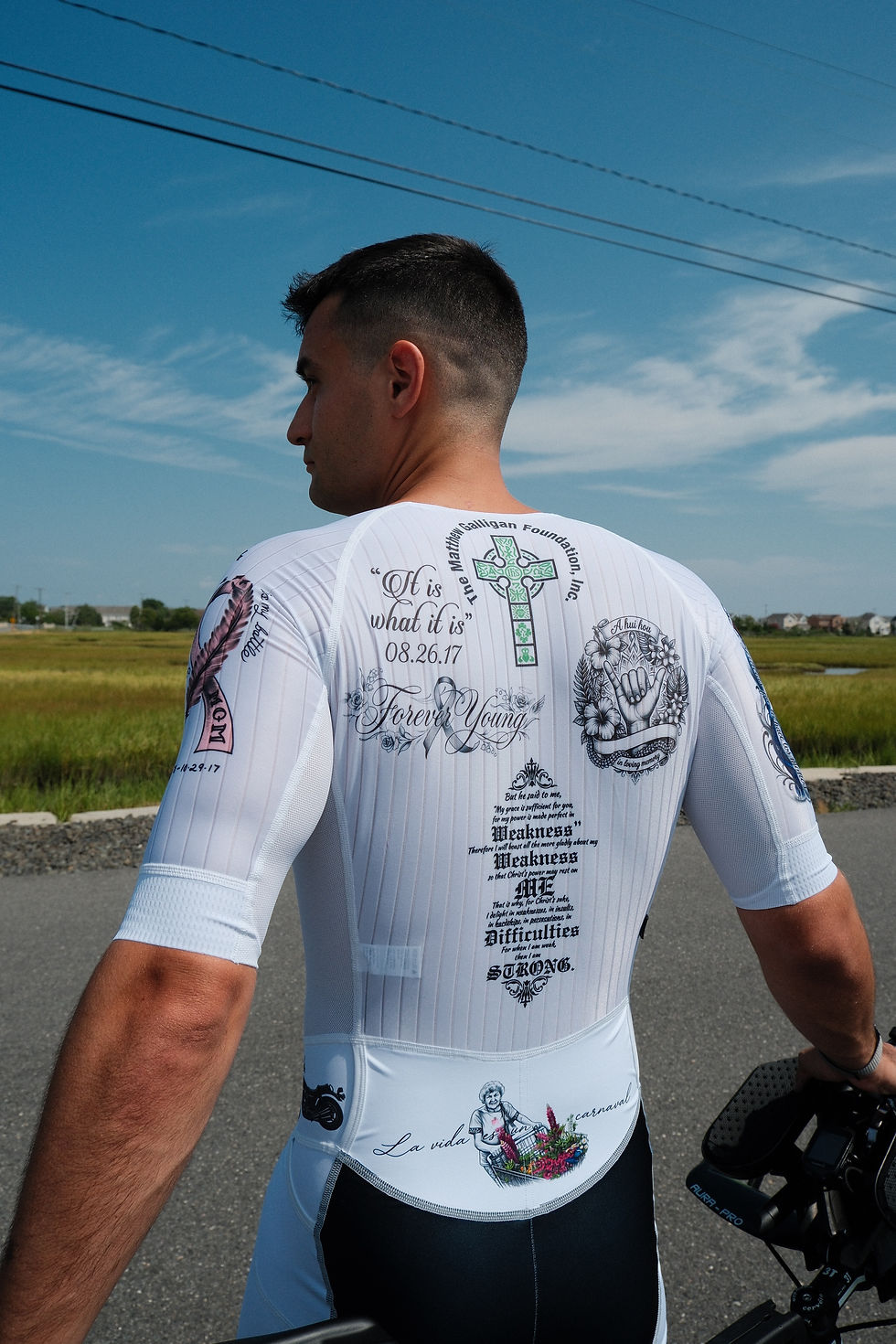
I had a custom memorial tattoo tri suit made for race day. The plan was simple: wear it, get people asking questions, and turn those conversations into more donations. Race day was supposed to be the celebration of all of it.
Seven months of double days
I trained for this race for seven months. Six days a week were doubles, and Sunday was the long run. Every single week looked like this:
Day | Session 1 | Session 2 |
Monday | Swim | Bike |
Tuesday | Bike | Run |
Wednesday | Run | Swim |
Thursday | Bike | Run |
Friday | Swim | Bike |
Saturday | Long bike | Run off the bike |
Sunday | Long run |
All of that sat on top of running a physical therapy business and coaching my own athletes. There was a fair amount of burnout along the way.
Near the end of the block, I was sliding toward overtraining. My HRV kept dropping, my sleep was poor, and I had no desire to do my workouts. Some days it isn't about motivation. It's about showing up and getting it done anyway.

The letdown
It felt like I had built up this huge thing, only to never get to do it. I raised all that money, and when it was finally time to celebrate the work, there was nothing to celebrate.
Getting back to training has been hard. I haven't run since the cancellation. What I have done is get back on the bike, at a steady, easy rhythm with no plan attached. For now, that's been enough.

Taking my own advice
Last year, one of my clients was training for the LBI 18 Mile Run. It was cancelled for almost the same reason: a storm and flooding. Here's what I told her:
"This doesn't take anything away from the hard work and dedication you put in to show up to the starting line. The race is supposed to be the reward for the training block. You still put the hard work in, regardless."
I meant every word. Now it's my turn, and I'm finding that advice is a lot easier to give than to take.

Do coaches have to do the hard things?
This cancellation made me ask myself something I hadn't said out loud: why do I feel like I have to do the hard races?
In the endurance world, it's easy to see coaches who are really fast or who race the hardest events and assume that's what makes them qualified. Somewhere in my subconscious, I bought into that. If I'm going to coach people through a 70.3, I should be out there suffering through one too.
But I know that isn't true. I have a bachelor's in exercise science, a doctorate in physical therapy, and multiple coaching certifications. My knowledge and my experience are what make me a good coach. A finish time doesn't.
So why race at all? Because I love it. I love the feeling of racing, the same way I love watching an athlete become a better version of themselves after working hard for something. Racing has taught me real things about fueling, nutrition, and tapering that I bring to my athletes. But it's something I get to do, not something I have to do to earn the title of coach.
I know that. Some days it still feels like I have to prove it.

If your race gets cancelled
If you've been here too, this is what I'd tell you, and what I'm working on telling myself:
The work still counts. Every early alarm and double day built fitness and discipline. A cancelled race doesn't erase any of it.
Let yourself be disappointed. You built toward something for months. It's normal for it to sting.
Move without a plan for a bit. Do what you actually enjoy, like easy rides for me. Your body and your head both need it after a big block.
Don't rush into a replacement race. If you were already run down, cramming another race in on tired legs is how injuries happen. Check your sleep, energy, and HRV before you commit.
Decide how you want to close the chapter. A backyard version of the race, a long ride, or a redemption race next year all count.
Build back better. You now have more experience and a fitness base to build on for whatever comes next.

What's next
I haven't decided how I'll close out this year. It might be a backyard half Ironman or one really long ride for Matt.
Next year, the first half belongs to something bigger: I'm getting married in May 2027. After that, I want my redemption at Jones Beach, to finish the block I started this year and finally wear that suit across the line.
Before I close the fundraiser, I'll be selling memorial T-shirts for Matt. If you want one, or want to donate, this is what it will look like:

And if you're dealing with a cancelled race, a DNF, or just a training block that left you burnt out, reach out. You don't have to figure out what's next alone.
Dr. Mike Blanco, PT, DPT, Cert. DN | Rival Physical Therapy


Comments